

Understanding the Cue-Routine-Reward Cycle
How your brain’s reward system creates automatic behaviors — and why willpower isn’t the answer
Read ArticleWhy seeing your progress on paper works better than apps — plus templates you can start using today

Here’s the thing about habit tracking apps — they’re convenient, they send notifications, and they’ve got all the features. But they’re missing something crucial. There’s no friction. No real weight to the action. You tap a screen and it’s done. Forgotten by tomorrow.
A printed tracking sheet? That’s different. You physically mark off each day. You see the chain build week by week. When you miss a day, there’s a visible gap that stares back at you. That’s accountability you can actually feel. And it works.
This guide walks you through why visual tracking matters for habit formation, how to design a sheet that actually suits your life, and specific templates you can adapt starting today.
Visual progress creates psychological reinforcement. When you mark a box each day, your brain registers a small win. Repeated wins build momentum. Momentum creates lasting change.
Digital tracking feels abstract. You open an app, log your activity, close the app. There’s no physical reminder sitting on your desk. It doesn’t catch your eye when you’re thinking about skipping a session.
A printed sheet changes that. You see it. You interact with it. You mark it with your own hand — pen or pencil — and that tactile action matters more than you’d think. Research in habit formation shows that physical engagement increases commitment. When you’ve written something down, you’re more likely to follow through.
Plus, there’s the chain effect. You’ll notice after two weeks of consistent marking that you don’t want to break the chain. That’s not willpower anymore — that’s your brain recognizing a pattern and wanting to preserve it.


Not all tracking sheets are created equal. You’ve probably seen the fancy ones — seven columns for the week, different colored boxes, decorative borders. They look nice. Then you abandon them after week three because they’re too complicated.
The best sheet is the one you’ll actually use. That usually means simple. A basic grid works perfectly — seven columns for days, as many rows as you have weeks. One habit per sheet. No clutter.
The actual dimensions? A4 paper works fine. Landscape orientation gives you more room for weeks across the top. Don’t overthink it — the tracking habit itself matters far more than the sheet’s aesthetic.

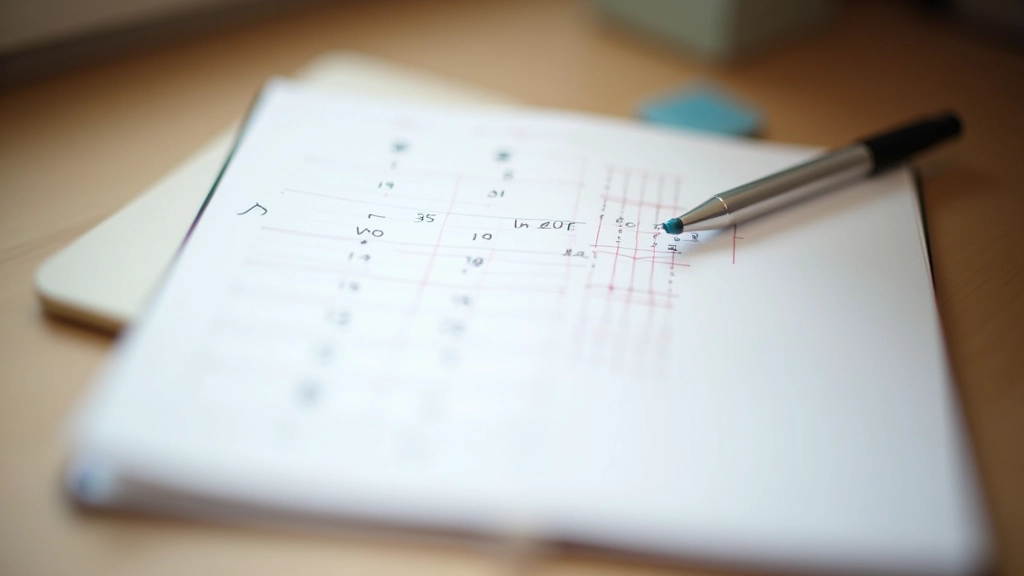
You don’t need anything fancy. But having a starting point helps. Here are three templates that work for different situations:
Best for: One habit, 8-week tracking. Draw seven columns (Mon–Sun) and eight rows (weeks 1–8). Mark with an X or checkmark each day you complete the habit. It’s minimal, effective, and takes about two minutes to set up. Most people find this format least intimidating.
Best for: Tracking 3–5 habits simultaneously. Create rows for each habit, columns for each day. You’ll see at a glance which habits are consistent and which ones slip. This works especially well for morning routines or end-of-day wind-down sequences.
Best for: Habits that benefit from reflection. Add a notes column where you write one sentence about how the session went. Did it feel hard? Easy? Did something interfere? These notes help you troubleshoot when motivation dips and show you patterns you’d otherwise miss.

This article provides informational content about habit tracking methods and habit formation principles. It’s designed to help you understand how visual tracking works and explore different approaches. Results vary based on individual circumstances, existing habits, motivation levels, and consistency. Habit formation is a personal process — what works brilliantly for one person might need adjustment for another. This content isn’t a replacement for professional guidance if you’re working with a behaviour change specialist or therapist.

You’ve got your sheet. You’ve marked the first week. Then life happens — work gets busy, you miss a day, suddenly you’re three days behind and you feel like you’ve failed. So you stop.
Here’s what actually works: Don’t abandon the sheet if you miss a day. Instead, mark it differently. Draw a circle instead of a checkmark. Write “missed but reset today” in the notes. The tracking continues even when the habit doesn’t. Why? Because the real goal isn’t perfection. It’s to build awareness and keep the habit in your conscious mind. Missing one day and getting back on track is success — it’s learning resilience.
Also, don’t hide the sheet. Put it somewhere you’ll see it. On your bathroom mirror. Next to your coffee maker. Pinned to your desk. The visual reminder is half the value. You’re not trying to be subtle about this.
And here’s something people don’t expect: your sheet will eventually feel like a friend. After eight weeks of marking it daily, you’ll notice you’ve developed a relationship with that piece of paper. That might sound odd, but it’s real. That relationship is the accountability. And that’s exactly what you need for lasting change.

You don’t need an expensive planner or a complicated system. Grab a sheet of paper, draw a grid, and start marking. Pick one habit. Commit to eight weeks. See what happens.
The tracking sheet works because it’s simple, visual, and real. There’s no algorithm deciding whether you “really” completed your habit. There’s no push notification interrupting your day. It’s just you, a pen, and a growing chain of marked boxes.
That’s accountability you can build on.
Learn how habits form, why they fail, and how to design routines that stick
Browse All Articles